spring

Agent Control Theory
agents

Agent Control Theory

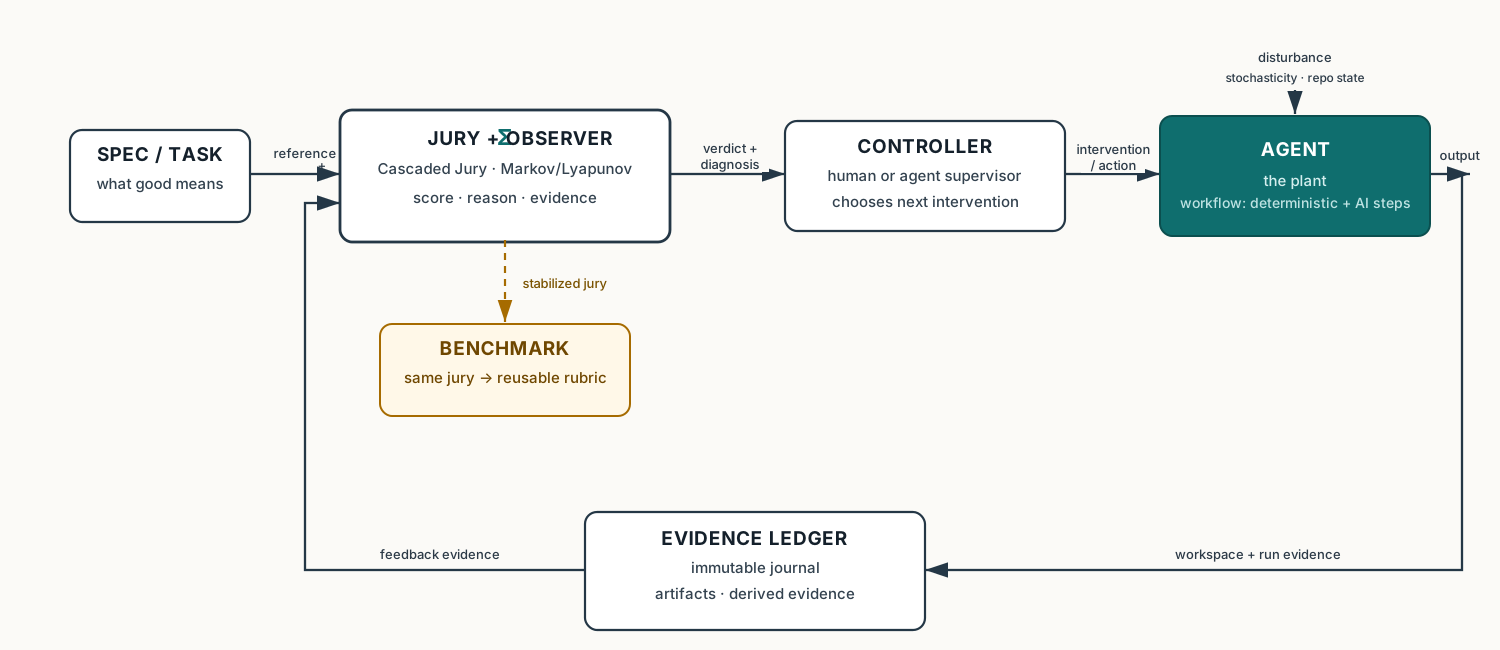
Agents are taking on more of software development, and steering them turns out to be an old problem in disguise. The feedback loop that keeps them on course is nothing new. It is the founding idea of control theory. Now, let's point it at agents.

Here Comes the Judge
agents

Here Comes the Judge

Your agent says it completed the goal. How do you know? You need judges — composable, tiered, and often free. Here's how to build a jury system for your agents.

How Does Your @Agent Flow?
agents

How Does Your @Agent Flow?

Most agent code is a prompt and a loop. agent-workflow gives it explicit flow — a pure-Java DSL that compiles to a graph you can inspect, gate, and replay.

When You Come to a Fork in the Code, Take It
agents

When You Come to a Fork in the Code, Take It

The agent read the skill. Then it read the existing code. Then it wrote with the older pattern. Six runs, both variants, every time. Your codebase is the agent's primary teacher — no skill can override it.

ACP Java SDK: Building IDE Agents in Java
acp

ACP Java SDK: Building IDE Agents in Java

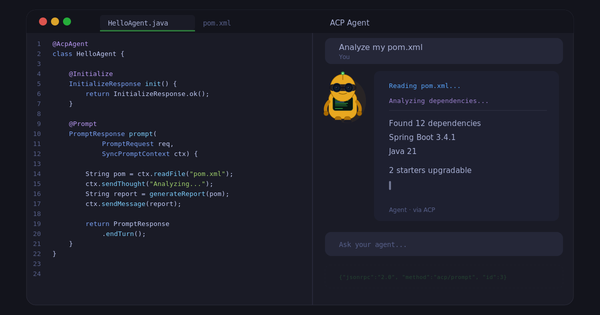
ACP standardizes how code editors talk to AI agents — LSP for the agent era. The Java SDK gives you annotations, a sync API, and in-memory testing. Here's what the programming model looks like.

I Read My Agent's Diary
agents

I Read My Agent's Diary

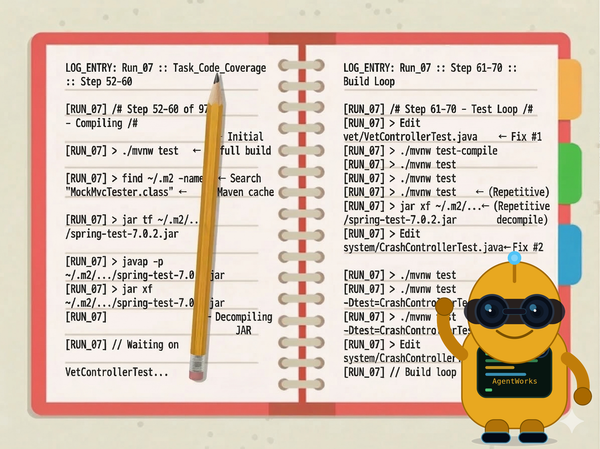
Every agent run leaves a trail. Record it, judge it, find the hotspots, fix them, run again. That's the loop that turns unpredictable agents into reliable ones.